You know what's funny? let’s be honest: "gamification" has become the lazy consultant’s favorite buzzword. edit: fixed that. When a product team is struggling with engagement, someone inevitably says, "Let’s add a leaderboard or a badge system."
That is a mistake. Adding superficial game mechanics to a broken product is like putting a spoiler on a bicycle—it looks faster, but you’re still pedaling just as hard to go nowhere.
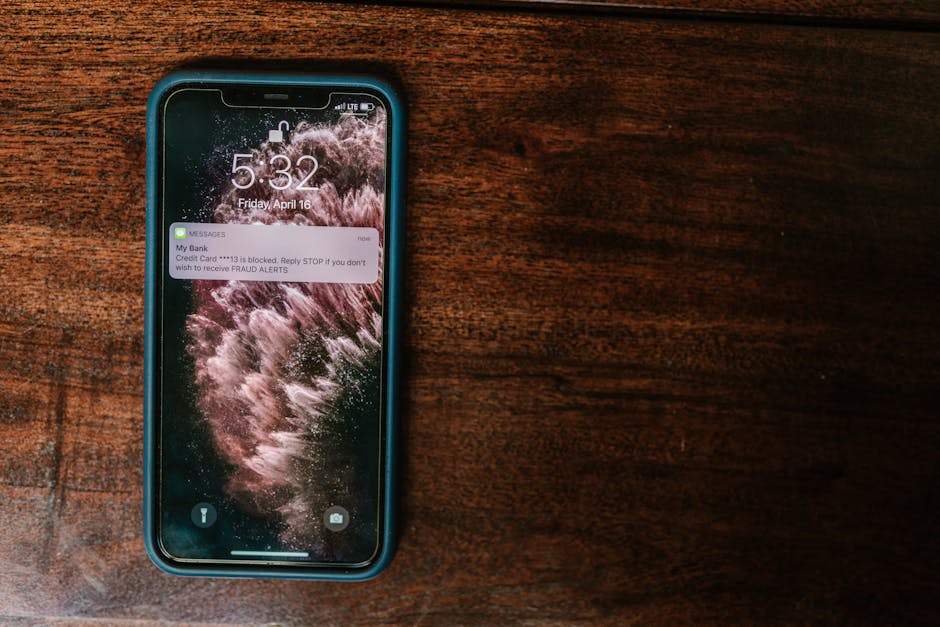
As a growth lead who has spent a decade obsessing over user journeys, I don’t care about badges. I care about behavior change. If your gamification isn't driving a measurable shift in user behavior, you aren't gamifying; you’re just decorating.
What Does the User Do Next?
The most important question in product design isn't "How do we make this fun?" It is, "What does the user do next?"
Great gamification creates a continuous interaction loop. It’s not a one-time reward; it’s a feedback cycle that pulls the user back into the product. Whether you are building mobile apps or complex enterprise software, the loop must be tighter than a drum.
If your user completes an action, gets a point, and then stares at a static dashboard with no clear "next step," your gamification has failed. You’ve created a dead end, not a loop.
Measuring the Impact: Beyond the Vanity Metrics
If you tell me your "active users increased," I’ll ask for your cohort analysis. Vague engagement stats are a trap. You need to tie your mechanics to specific outcomes.
Here is the reality check: Most teams measure if a user logged in. You should be measuring what they triggered after logging in.
1. Feature Adoption Rates
Are your gamified prompts actually driving usage of core features? If you’ve introduced a "streak" mechanic, does the user interact with the primary value proposition of the app, or are they just clicking the notification to keep the streak alive?
2. The Cohort Analysis
Don't look at aggregate data. Slice your users by sign-up date and behavior. Compare the retention of users who interacted with your gamification elements against those who ignored them. If the "gamified" cohort drops off at the same rate as the non-gamified cohort, your mechanics are noise.
3. Time-to-Value (TTV)
Does the gamification help the user reach the "Aha!" moment faster, or does it add unnecessary steps? If it’s the latter, you’re creating friction, not value.
The "Tiny Friction" Audit
I keep a running list of "tiny frictions" that kill retention. In my experience, even the most sophisticated gamification strategies die the death of impact of real-time notifications a thousand cuts.
If your mobile app takes three seconds to load a leaderboard, or if the "Claim Reward" button requires a second tap that feels redundant, your users will leave. Mobile performance is not a "nice to have"—it is the bedrock of your UX. If the app feels sluggish, the gamification feels like a chore.
Friction Point Impact on Gamification The Fix Over-complicated UI User loses focus Simplify navigation; prioritize the "next action." Slow load times Breaks the dopamine loop Optimize assets; prioritize local caching. Irrelevant rewards Decreases perceived value Use personalization/recommendation engines. Hidden progress bars User feels lost Use persistent, frictionless progress indicators.
Lessons from MrQ and Streaming Giants
Look at MrQ. As a casino app, they operate in an environment where attention is scarce. They don't just throw pop-ups at you. They use gamification to create a frictionless UX that makes the navigation feel like part of the entertainment. They understand that if the flow from "login" to "play" is interrupted by fluff, the user leaves.
Similarly, look at Streaming platforms. They aren't just showing you a movie; they are using personalization and recommendation engines to gamify your discovery. When a platform suggests "Because you watched X, here is Y," they are turning content discovery into an interaction loop. They reward you with relevance.
Even in the B2B space, research from McKinsey Digital suggests that the highest-performing digital products are those that integrate "nudges" into the user's natural workflow rather than forcing them into a separate "gamified" area of the app.
As noted in the B2B News Network (B2BNN), B2B buyers now expect the same level of frictionless interaction they get from consumer mobile apps. If your B2B dashboard feels like a clunky spreadsheet while their personal phone feels like a high-end streaming app, your adoption will suffer.
The Checklist: How to Audit Your Gamification
Before you commit more budget to "improving engagement," run your current strategy through this checklist:
Is the action meaningful? Does the gamified task actually help the user solve a problem, or is it busywork? Is the feedback immediate? If a user performs an action, do they get visual or functional feedback within 500ms? Is the navigation frictionless? Can the user move from the "reward" back to the "core task" in one tap? Is it personalized? Are you showing generic rewards, or are they tied to the user’s history using a recommendation engine? What does the user do next? If you can't answer this in one sentence, your gamification is just a shiny object.Final Thoughts: Stop Decorating, Start Designing
Gamification is a tool to reinforce desired behaviors. It is not a substitute for a product that provides value. If your retention metrics are flat, don’t add another badge. Go back to your cohort analysis and look at where the drop-offs happen.
Fix the tiny frictions. Ensure the next step is obvious. If you focus on the user's flow rather than the leaderboard, you’ll find that you don’t need to force engagement—it will happen naturally.

The best gamification is the kind the user doesn't even notice. It just feels like a better, faster, more relevant product.